Table of Contents
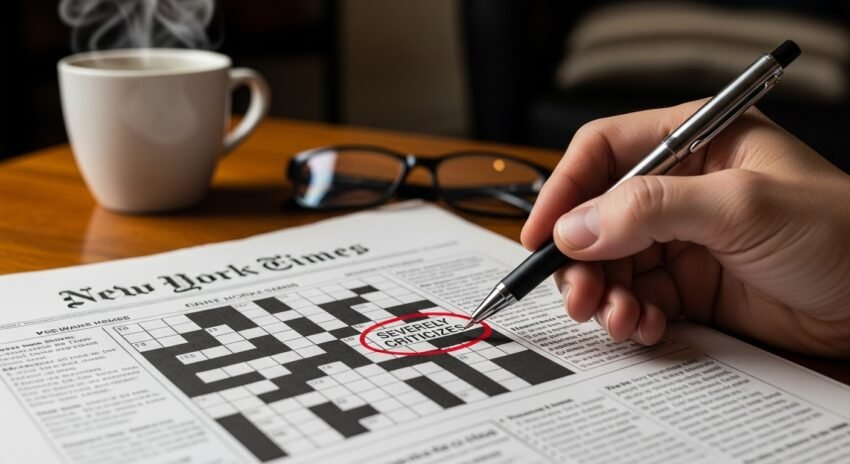
If you love solving crosswords, especially those from The New York Times, you may have come across the clue “severely criticizes” before. It’s a clue that shows up from time to time, usually challenging even the most seasoned solvers. Why does this clue stick out? Because it can have many answers. Also, it often leads to words that sound intense—just like someone really letting out strong opinions. In this guide, we’ll walk through everything behind the crossword clue severely criticizes, what its possible answers are, and what it tells us about how the NYT crossword is made. Whether you’re new to crossword puzzles or a daily solver, you’ll find this helpful, fun, and full of useful tips for when this tricky clue pops up again.
What Does “Severely Criticizes” Mean in Crossword Language?
In crossword puzzles, the clue “severely criticizes” typically leads to a word or phrase that means to judge harshly, speak against, or tear down something with strong words. Words like “rips into,” “slams,” “lashes,” or “tears apart” are good examples. These kinds of entries usually suggest strong, outspoken criticism. So, if you’re looking at this clue, think about verbs or short phrases someone might use when they’re very unhappy with something. The puzzle wants a strong word—but it also needs it to match the number of boxes and any crossing letters.
Common NYT Answers for “Severely Criticizes”
This clue has shown up several times in The New York Times crossword over the years. Some common answers include:
- Rips
- Slams
- Roasts
- Rants
- Blasts
- Lays into
- Tears apart
- Reams
Each answer depends on the puzzle’s theme and how long the word is. If the clue is four letters, “slams” may not fit, but “rips” might. Always check your cross-letters to narrow it down. That’s why context and crossing clues are so important in solving.
Why the NYT Loves This Kind of Clue
The team behind the New York Times crossword enjoys wordplay, double meanings, and making solvers think. A clue like “severely criticizes” is vague enough to be fun but not so hard that it feels unfair. It also opens the door to multiple words, which makes building puzzles more flexible. Crossword editors love when clues have many potential answers because it tests a player’s vocabulary and guessing skills. That’s why this clue keeps coming back—it gives word fans a playful challenge that feels fresh every time.
How Crossword Clues Get Their Tone
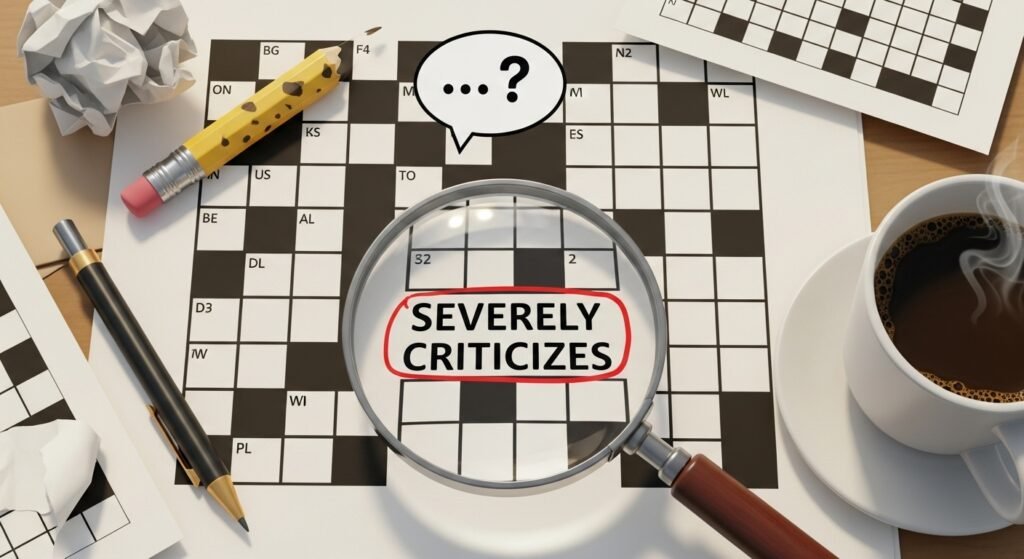
NYT crossword clues range from straightforward to witty, and “severely criticizes” falls somewhere in between. It’s pretty direct, but it allows for a range of word types. Some clue writers (called constructors) like using strong verbs for added effect. That’s why a clue like this might pop up even in a light-hearted puzzle. It’s not intended to be serious—it’s just another way to test your brain on action words that you might forget you knew. Still, clues like these add some spice to your solving routine and expand your knowledge of expressive language.
How to Solve Clues Like “Severely Criticizes”
When faced with the clue “severely criticizes”, start by asking: how long is the answer? Is it 4, 5, or 7 letters? That helps eliminate some options. Then think of synonyms that match the idea of harsh words or actions. Ask yourself: how would a person behave when they’re really upset about something? Would they rant? Slam? Bash? Blow up? Cross-check it with other letters from the puzzle. More letters means more clues to guide you. Don’t be afraid to write possible answers in pencil and change them as needed when more spots are filled.
Similar Clues That Trip Up Solvers
Sometimes, crossword clues are worded just differently enough to throw you off. Clues similar to “severely criticizes” might be:
- “Points out flaws strongly”
- “Calls out harshly”
- “Verbally attacks”
- “Reads the riot act”
- “Says mean things about”
Watching for clues that feel like they belong in the same family can help spark ideas. When you see clues like these, think loud, harsh, or powerful words. The NYT loves giving solvers clues that feel familiar but that have inventive answers.
Examples from Real NYT Crosswords
Here are a few examples of when the “severely criticizes” clue has shown up in actual New York Times puzzles:
- June 9, 2021: Clue: Severely criticizes | Answer: RANTS
- August 13, 2022: Clue: Severely criticizes | Answer: BLASTS
- March 15, 2023: Clue: Severely criticizes | Answer: REAMS
These examples show that while the clue remains the same, the answer can differ each time. That’s why regular NYT solvers keep their minds open to many possible solutions. What worked once won’t always work again.
Tricks for Remembering Tough Synonyms
Learning new words or remembering rare ones is part of the fun. To master clues like “severely criticizes”, make a mini thesaurus in your head. Group all the words you know that mean harsh insults, strong criticism, or tough feedback. Think TV judges, angry tweets, or harsh reviewers. The more synonyms you know, the faster you’ll be able to solve similar clues. You can also build a personal word list in a notebook or memo app just for tricky crossword clues or surprising answers you meet along the way.
Crossword Clue vs. Real-Life Usage
It’s fun to see how crossword clues like “severely criticizes” compare to words people use every day. In real life, we say things like “that critic really slammed the film,” or “they roasted that performer.” Crossword clues often use a more general tone—like “severely criticizes”—to cover all those styles. It’s important to match your language instinct with the puzzle world’s logic. Some words, like rants, might not mean severe in real talk, but in puzzle language, it fits the tone perfectly.
The Role of Word Length and Crossword Grid Design
Why doesn’t the NYT crossword clue say “harshly yells at” instead of “severely criticizes”? Because word length matters. Longer clues or answers don’t always fit the grid structure. Constructors aim to balance tight crossword layouts with clever clues. Saying “severely criticizes” gives room for 4–8-letter words to fit across or down the puzzle. It’s a careful and creative process. The same clue might produce “scolds” in one puzzle and “lashes” in another depending on what fits around it. That’s part of why solving puzzles stays fresh week after week.
Crossword Clues That Make You Smarter
One of the best parts of solving crosswords is learning new words. Clues like “severely criticizes” teach solvers to connect meanings—how “blast,” “tear apart,” and “slam” can all describe harsh words. That builds language flexibility. It also teaches grammar, tense, and vocabulary. Crossword puzzles can even teach you idioms and sayings from past generations. They’re like vocabulary lessons with a game twist. The more you solve, the sharper your language skills become over time.
FAQs
1. What does “severely criticizes” mean in a crossword puzzle?
It usually refers to a strong or harsh verb like “rants,” “blasts,” or “reams.”
2. What sort of answers should I expect?
Answers can be short and punchy, like “rips,” “slams,” or “tears”—words linked to verbal attacks.
3. How do I know what answer to choose?
Check the number of letters and look at other clues that intersect with the word.
4. Is “severely criticizes” a common clue in NYT puzzles?
Yes, it shows up frequently, with different answers based on puzzle structure and theme.
5. Can one clue have multiple right answers?
Yes, depending on the puzzle date, the same clue can lead to a variety of correct answers.
6. How can I get better at solving this type of clue?
Practice solving NYT puzzles, study word lists of synonyms, and keep track of past answers.
Final Thoughts
If the severely criticizes NYT crossword clue keeps stumping you, don’t worry—you’re not alone. Like many NYT clues, it’s meant to stretch your brain a little. The best way to conquer clues like this is with practice. Learn new words, think about emotions behind actions, and connect meanings. Check how long your answer should be. Use cross letters for clues. And most of all, have fun with it. Crosswords should feel like a puzzle, not a test. The next time you see this clue, you might not scratch your head—you might smile and know exactly what to write. Keep solving, keep learning, and enjoy the game one square at a time.