Table of Contents
Studying for your driving test? Feeling unsure about road signs? Don’t worry—you’re not alone. Understanding road signs is one of the most important parts of learning how to drive. These signs tell us what to do, where to go, and how to stay safe on the road. A cheat sheet dmv road signs and meanings can be your best friend while preparing for the written permit test or even brushing up before hitting the road. These signs aren’t just symbols. They’re like simple messages from the road, making sure everyone can share the streets safely and wisely. In this friendly guide, we’ll explain the most common DMV road signs in clear, simple language anyone can understand. You’ll also learn their shapes, colors, and meanings so you can remember them easily. With the right cheat sheet, passing the DMV test can feel a whole lot easier—and way less scary. Let’s get started on your journey to becoming a confident and smart driver!
Why Road Signs Matter
Road signs are a big deal. They help control traffic, show direction, and alert drivers about risks ahead. Without them, driving would be confusing and chaotic. They’re like silent helpers, keeping roads safe and organized. Every driver, from beginners to pros, needs to understand what these signs mean. The cheat sheet DMV road signs and meanings guide is here to break them down for you. Knowing these signs helps you avoid tickets, stay safe, and drive with confidence. Some signs tell you when to stop, others warn you of curves, and some show speed limits. Each one has its own shape and color for a reason. Once you learn the patterns, you’ll be reading signs like second nature. Taking time now to understand road signs means fewer surprises on the road later.
Shape and Color: The Secret Code Behind Road Signs
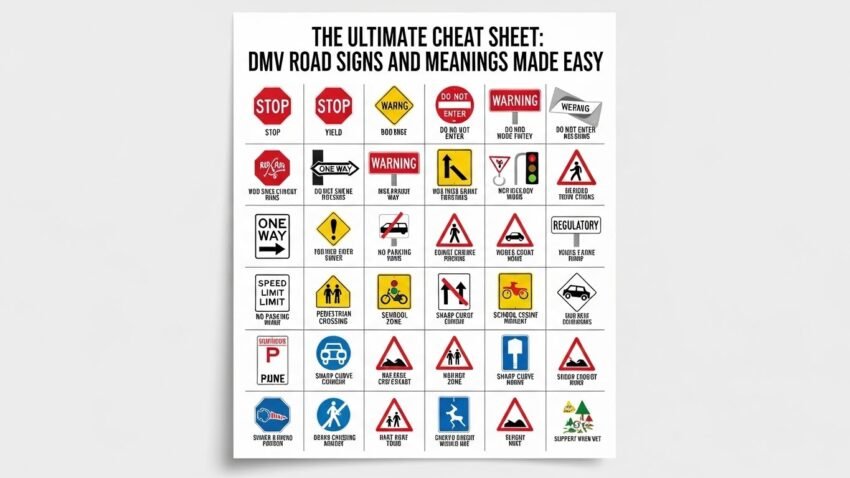
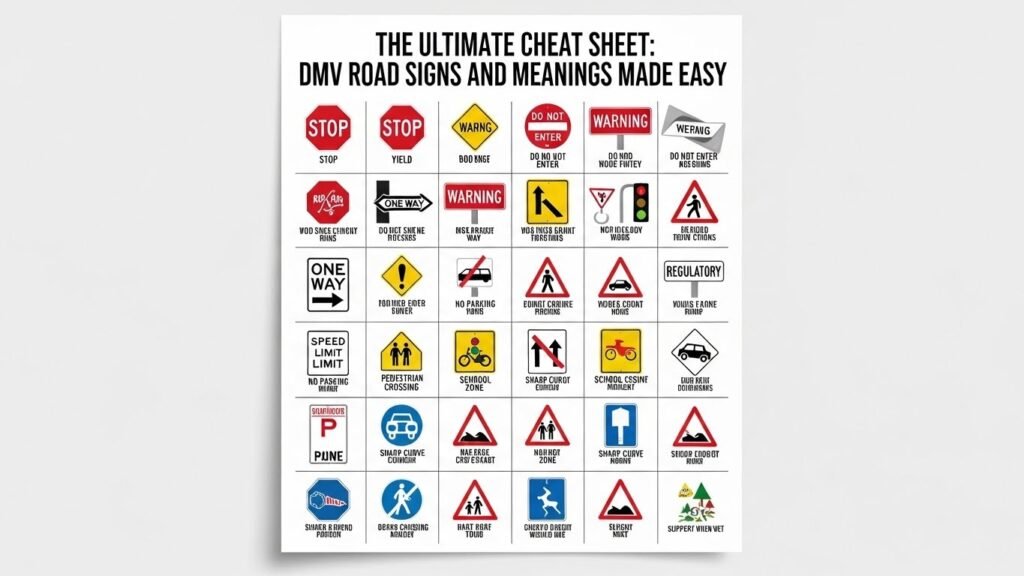
Have you ever noticed that road signs come in different shapes and colors? That’s on purpose! The shape and color of a sign help you understand its meaning at a glance—even from far away. On this cheat sheet dmv road signs and meanings , here’s a simple breakdown. Red signs (like Stop or Do Not Enter) mean you must stop or something is not allowed. Yellow signs warn you about changes or dangers coming up—like curves or animal crossings. Green signs give you information like street names or directions. Blue signs show services such as rest areas or hospitals. White signs usually tell you the law, like speed limits. Orange signs are used during construction. Shapes also help. Octagon means stop. Triangle pointing down means yield. Diamond is for warnings. Rectangle gives instructions. Circle and crossbuck are used for railroads. Once you know the code, reading signs becomes super easy.
Regulatory Signs: What You Must Do or Not Do
Regulatory signs are the rules of the road, and breaking them can lead to a ticket—or worse, an accident. In your cheat sheet dmv road signs and meanings, these signs are some of the most important. The most famous one is the STOP sign, which is an octagon in red and white. It means you must come to a complete stop. A Yield sign, shaped like a triangle, means let others go first. Speed limit signs show you the fastest you can legally drive. Signs that say No U-turn, No Left Turn, or Do Not Enter are also regulatory. These tell you that certain actions are not allowed at that location. One-Way signs let drivers know traffic flows in one direction only. These signs are often white with black or red writing. Memorizing a few of these can make your test easy and keep you safe on the road.
Warning Signs: Things to Watch Out For
Think of warning signs as your personal lookout while driving. They give you a heads-up about things coming up on the road. Most warning signs are yellow and diamond-shaped with black symbols or words. On our cheat sheet dmv road signs and meanings, you’ll find warning signs like Slippery When Wet, Curve Ahead, and Pedestrian Crossing. These signs don’t tell you what to do—just what to expect so you can adjust your driving. For example, a school zone warning sign tells you to slow down because kids might be near. A sign with two arrows going opposite directions warns about two-way traffic. Even pictures of animals, like deer or cows, mean animals commonly cross in that area. Knowing these signs can help you react quickly and keep everyone safe, especially when road or weather conditions suddenly change.
Guide Signs: Helping You Get Where You Need to Go
Getting lost is no fun, especially when you’re out on the road. That’s why guide signs are so helpful. These signs are usually green and rectangular, and they tell you where you are, which exit to take, or how far away a city is. A common example is the exit sign on highways. Other guide signs include mile markers, route numbers, and highway direction signs like East, West, North, or South. On freeways and interstates, these signs help you plan turns or the next stop. The cheat sheet dmv road signs and meanings lists key guide signs like service signs (usually blue), which show gas stations, food, hospitals, or rest areas nearby. These signs might not feel urgent during a driving test, but they’re very useful in real life while traveling or commuting.
Construction and Work Zone Signs
Sometimes roads need fixing, and that’s when you’ll see construction signs. These signs are usually orange and shaped like diamonds or rectangles. They’re used to warn you that road workers are present or that conditions have temporarily changed. Sign examples include Road Work Ahead, Detour, Flagger Ahead, or Lane Closed. The cheat sheet dmv road signs and meanings highlights that drivers must slow down in these zones and follow instructions carefully. Fines for speeding in work zones are often doubled. Some signs may have flashing lights or workers directing traffic. It’s important to always pay attention and give space to the workers to keep everyone safe. These signs are temporary but very important during construction time, even if they only last a few days.
Railroad and Railway Crossing Signs
Train crossings bring their own kind of signs, and they are very unique. When you’re studying the cheat sheet dmv road signs and meanings, make sure not to skip these. The most common sign is a round yellow sign with a big “X” and the letters “RR.” This means a railroad is up ahead. Slow down and listen for a train. The crossbuck sign (an “X” like a railroad crossing) is placed directly at the tracks and usually has the words “Railroad Crossing” on it. Sometimes you’ll also see flashing red lights or lowered gates—these must be obeyed. Never cross until the lights stop flashing and the gate goes up. Trains can’t stop quickly, so these signs are there to save lives. Even if you don’t see a train, always check twice before crossing tracks.
School Zone and Pedestrian Signs
School zones and pedestrian signs are made to protect people walking—especially kids. In your cheat sheet dmv road signs and meanings, these signs are must-know for both testing and for everyday driving. School zone signs are usually fluorescent yellow-green and show two people walking together. They warn drivers to slow down when children may be crossing. There are also crosswalk signs and signals that mean Yield to Pedestrians or Watch for Pedestrians. These signs often show a stick figure walking and may be found near schools, parks, or in busy shopping areas. These signs are extra important because kids don’t always look both ways before crossing. Driving slowly and staying alert in these areas can save lives. During school hours or when lights are blinking on the sign, a lower speed limit often applies.
Must-Know DMV Test Signs from the Cheat Sheet
Every DMV test includes questions about road signs. Thankfully, this cheat sheet dmv road signs and meanings shows which ones are most likely to appear. Expect to be tested on the STOP, YIELD, Speed Limit, School Zone, and No U-Turn signs. You may also see questions about signs that show a lane ending or merging traffic. Learn to recognize these signs by shape and color even without the words. The DMV may show just the picture and ask what it means. Flashcards or printable cheat sheets help a lot. Some people also use apps to quiz themselves on signs. By knowing these signs well, you’re not just preparing for a test—you’re building smart, safe habits for your future road trips.
Tips to Memorize Road Signs Easily
Learning road signs might seem boring at first, but there are fun ways to make it easier. First, break them into groups. Use the cheat sheet dmv road signs and meanings to divide signs by color, shape, or purpose. Flashcards are super helpful—put a picture on one side and the meaning on the back. You can also turn it into a game. Have a friend or parent quiz you while riding in the car. See who can call out signs the fastest! Another tip is to use apps or online quizzes that make studying feel more like playing. Repetition is key. The more you practice, the faster your brain remembers. Don’t wait until the night before your test—start early and practice a little each day.
Why Kids and Teens Should Learn Road Signs Early
Even if you’re not old enough to drive yet, learning road signs early can help in many ways. The cheat sheet dmv road signs and meanings can be used by younger teens and even kids who ride bikes or walk to school. When you understand signs, you stay safer as a passenger, pedestrian, or cyclist. You’ll know when it’s safe to cross streets or when drivers have to stop. It also makes learning to drive easier in the future. Parents can help kids spot signs during car rides and explain what they mean. That way, road rules become familiar long before it’s time to take the test. Learning road signs builds good habits that last a lifetime, and it can be a fun family activity too.
FAQs
1. What is the best way to study road signs for the DMV test?
Use a cheat sheet, flashcards, or DMV-approved apps. Focus on signs by shape and color to remember faster.
2. Are the signs on the DMV test the same in every state?
Most basic signs are the same nationwide, but some states include local signs. Check your state DMV guide to be sure.
3. What color are warning signs usually?
They are typically yellow and diamond-shaped, used to warn about driving conditions or nearby hazards.
4. What’s the difference between regulatory and warning signs?
Regulatory signs tell you what to do (like stop or speed limit). Warning signs alert you to possible dangers ahead.
5. Can children learn road signs before they drive?
Yes! It helps them stay safe as pedestrians and prepares them for driving school later.
6. How many road signs are on the DMV written test?
This depends on the state, but usually five to ten questions are about signs. Always be ready for at least a few.
Conclusion
Studying for your permit or license doesn’t have to be stressful. With this cheat sheet on DMV road signs and meanings, you have everything you need to feel more confident. Road signs are there to help—not confuse—you. So take your time, study smart, and remember what each shape and color means. Knowing road signs isn’t just about passing a test. It’s about becoming a safe, thoughtful driver who respects the rules and protects everyone on the road. Whether you’re a first-time driver, a parent helping a teen, or just someone needing a refresher, this guide is your quick and easy tool to get licenses faster and safer. Want some free downloadable flashcards or a printable version of this cheat sheet? Let us know, and we’ll help you get on the road the smart way!