Table of Contents
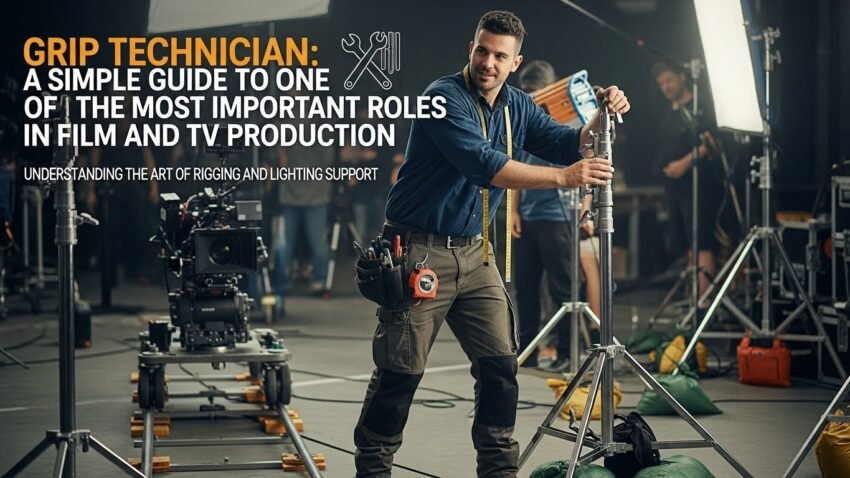
If you’ve ever watched a movie and wondered how they filmed that perfect scene—or how they kept the camera moving so smoothly—chances are a grip technician was involved. While actors and directors often get the spotlight, behind the scenes, grip technicians make movie magic possible. These workers are a key part of the film crew. They provide support, safety, and technical skill to help bring the director’s vision to life. But what exactly is a grip technician? What do they do on set? Why are they so important in Hollywood and beyond? This article will answer all those questions and more. We’re going to explore the role of a grip technician using simple words and real examples. Whether you’re a student curious about film careers or just love learning how movies are made, this guide will make it easy. Let’s take a closer look at how grip technicians help turn ideas into action on screen.
What Is a Grip Technician?
A grip technician is a crew member in film, TV, and video production who works with lights, rigs, and cameras. They build, move, and manage all the gear that holds cameras and lights in place. They don’t operate the camera or design the lighting—that’s someone else’s job. But they do everything needed to support those jobs. Grips keep things steady, safe, and running smoothly on set. Think of them as the strong hands and smart minds who help capture the perfect shot. If a director needs to film a scene with a moving camera through a narrow hallway, the grip technician figures out exactly how to do that without shaking or danger. Whether the shot is high in the air or low on the ground, grips make it happen.
The Different Types of Grips on Set
Not all grips do the same tasks. On a film set, there are usually multiple grips, and each one has a role. The Key Grip is the team leader. They manage all other grip technicians and work closely with the director of photography (DP). The Best Boy Grip is the key grip’s assistant and handles scheduling, gear, and crew tasks. Then there are the Dolly Grips, who operate moving equipment like dollies or camera tracks during filming. Other grip technicians help build lighting rigs, hold large screens to block or bounce light, or control camera cranes. Every role is important. On big movie sets, there could be over a dozen grip technicians working together. So, when you hear the term grip technician, know it refers to this group of creative, skilled crew members.
What Does a Grip Technician Do Each Day?
A grip technician’s day starts early. First, they unload and set up equipment like tripods, cranes, and dollies. Then, they help arrange these tools based on the needs of the director and camera team. During filming, they keep cameras steady, adjust setups for new angles, and make sure everything stays safe. They often place flags, diffusers, or bounce boards to control lighting without changing how it looks. They may set up platforms, tracks, or even secure gear hanging high overhead. Even during short breaks, grips are prepping for the next scene. Their work is all about solving problems quickly, lifting heavy things carefully, and keeping the team moving forward. And one thing’s for sure—every day is different.
How Grip Technicians Support the Camera Team
The camera operator can’t do their job alone. They need help moving the camera, steadying it, or getting it into tricky places. That’s where grip technicians come in. A grip technician helps mount cameras on dollies, vehicles, cranes, or complex rigs for moving shots. If the camera needs to travel down a hallway quickly or move up into the air, the grip technician sets up the system to do that. They check that everything is tight, level, and secure so the shot looks smooth and safe. Whether it’s a car scene, an action chase, or a slow pan across a room, grips make sure the gear underneath the camera is working perfectly.
Grip Technicians and Lighting: A Creative Partnership
You might think lights are just for the lighting crew, but grips play a big part in that too. While they don’t pick where lights go, grip technicians help shape and control the light once it’s up. They use tools like flags, silks, nets, and reflectors to block or soften the light. This makes a face look softer, controls shadows, or helps the light match the mood of the scene. Often, grip technicians work side by side with the gaffer (lighting leader) to get the look just right without needing more lights. So, when we ask “what does a grip technician do?”, one answer is: they help make light look beautiful.
Tools Grip Technicians Use on Set
Grip technicians use some of the coolest tools on set. They work with dollies, jibs, cranes, C-stands, rigging ropes, and special clamps called “apple boxes” or “Mafer clamps.” These tools help them move and hold equipment safely. Every grip technician has a set of tools on their belt: a wrench, gloves, flashlight, and a multitool for tightening bolts or cutting rope. On big productions, you’ll also find truckloads of metal rigs, sandbags, and scaffolding gear used for advanced setups. The right tool can make or break a shot. And grip technicians make sure they choose the right one every time.
How to Become a Grip Technician
Becoming a grip technician doesn’t mean you need a college degree, but you do need training and experience. Many people start as production assistants (PAs) or grip trainees and work their way up. You can also attend film school or take courses in production to learn the basics. Some learn by working on short films, student projects, or small commercials. Over time, these jobs teach safety rules, gear names, and how to work in a film crew. You must show up on time, work hard, and keep learning. It takes strong teamwork, patience, and a good attitude. If you’re curious about how things work and like being hands-on, being a grip technician could be the perfect fit.
Important Skills Every Grip Technician Needs
A grip technician needs more than muscles. They have to be smart, careful, and quick. First, basic mechanical skills help them understand how to build and fix things. Second, good communication skills are a must since they work with many departments. Grip technicians also need to stay calm under pressure. When there’s only five minutes before the next shot, problem-solving quickly could save the entire schedule. Teamwork matters the most. Grips must trust each other and help keep the crew safe. The best grip technicians are sharp thinkers with steady hands and strong connections with everyone on set.
Real-Life Example of a Grip Technician at Work
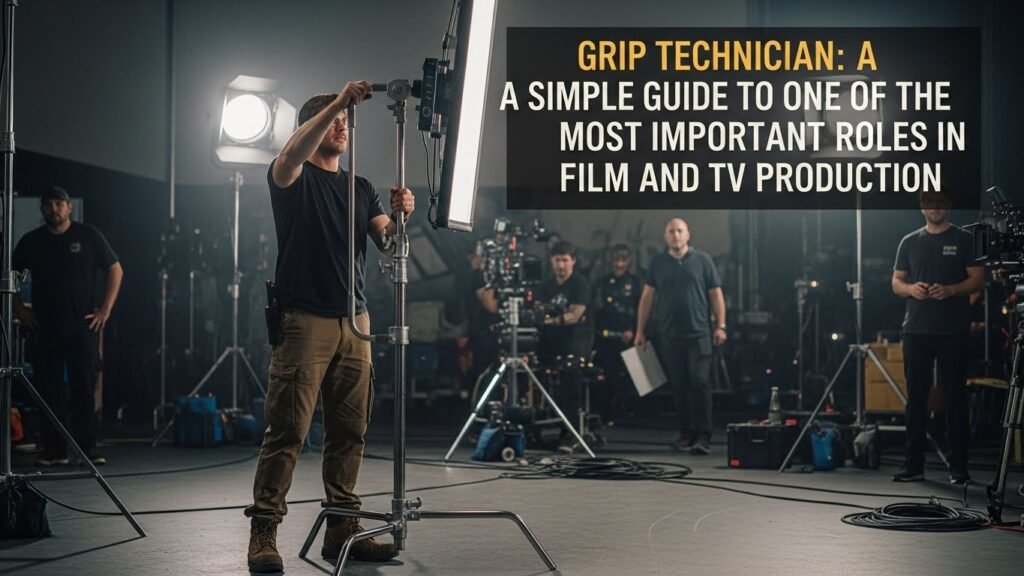
Imagine a scene in a movie where a camera follows a child running down a street. It’s one smooth shot, as if the camera is floating, even around corners. That was likely created by a grip technician operating a steadicam rig or a dolly with perfect timing. Now think of a night scene where a soft light glows on someone’s face through a window. That soft light was shaped by a grip using flags and reflectors. It’s not just technical—it’s artistic. Grip technicians blend brains, brawn, and beauty to support each moment you see onscreen. And they often do it in the background with no lines, no spotlight, and no applause—but every scene shines because of them.
Career Outlook and Advancement for Grip Technicians
Working as a grip technician can lead to long-term success in film and television. Those who gain enough experience may become key grips, leading entire departments. Others move into camera operation, rigging supervision, or stunt coordination. As more content is made for streaming services, the demand for skilled technicians grows. Big-budget films, indie projects, music videos, live shows, and commercials all need grips. The job offers variety, travel, and real hands-on work. While it’s not as famous as acting or directing, this career offers pride, respect, and a strong place in the film industry. For someone asking “what’s next after becoming a grip technician?”—the sky’s the limit.
FAQs
1. What is a grip technician in film? A grip technician sets up and controls camera rigs, lighting tools, and support equipment for film production.
2. Do grip technicians handle lighting too? They don’t place lights, but they use gear like flags and reflectors to shape and control light for the camera.
3. Is being a grip technician hard? It can be physically and mentally challenging, but it’s a great job for people who love hands-on work.
4. What’s the difference between a gaffer and grip technician? A gaffer controls lighting setup; a grip technician handles support gear and shaping that light on set.
5. How do I become a grip technician? Start on small film sets or student projects, learn from experienced grips, and build your knowledge through hands-on work.
6. Is this a good job for someone new to filmmaking? Yes! It’s a great entry point with no college requirement. It teaches teamwork, gear use, and real film set experience.
Final ThoughtS
So now you know the answer to “What is a grip technician?” They are the hidden backbone of movie magic. They help light the scene, move the camera, and support every shot. They use tools, creativity, and teamwork every single day. It’s not about being famous—it’s about being essential. If you love movies and want a job that keeps you active, creative, and part of something big, becoming a grip technician might be the perfect path. Start small, learn fast, and always be ready to help. The film world needs dependable hands behind the camera—and that could be you.